

Dancing Faun
The owner placed it where every visitor would see it first — at the head of an axis that ended with the Alexander Mosaic. It told his guests two things at once: that he knew how to enjoy life, and that he knew Greek culture.
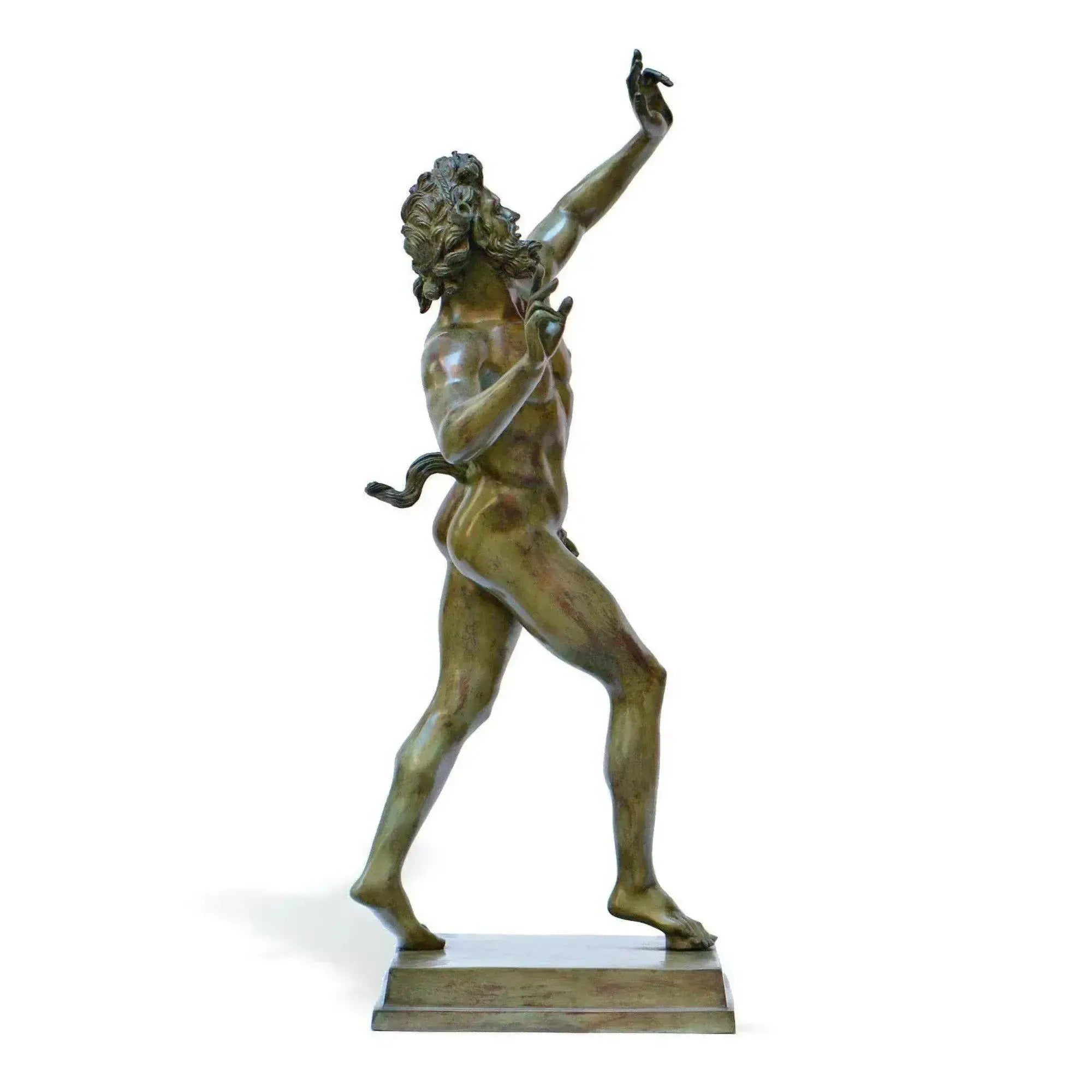
Enjoying life is a serious matter.
For a space devoted to otium — leisure understood not as the empty gap between one obligation and the next, but as an autonomous sphere of life, with its own places, its own objects and its own rituals. For the Romans, the world of otium stood opposed to the world of business, politics and the courts.
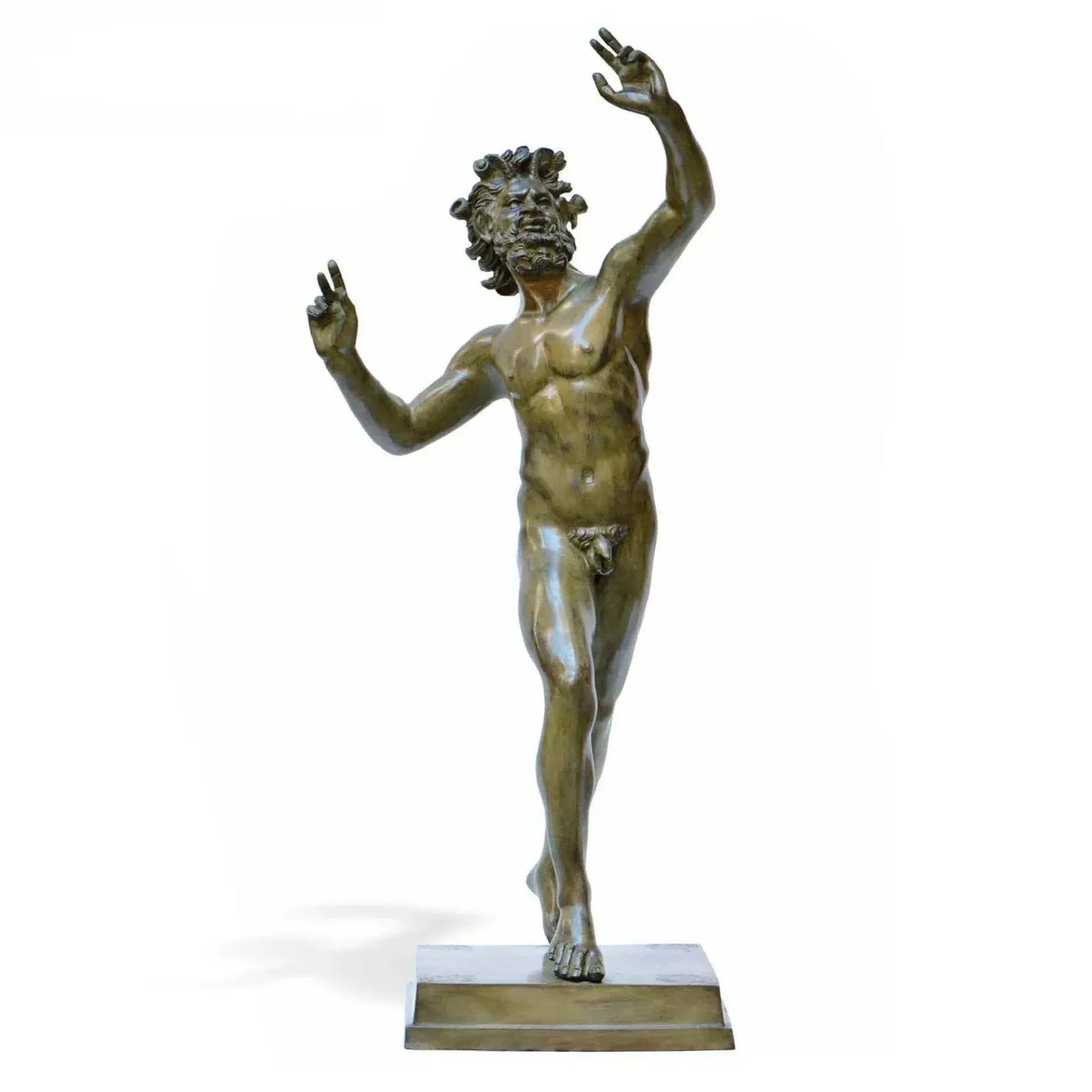
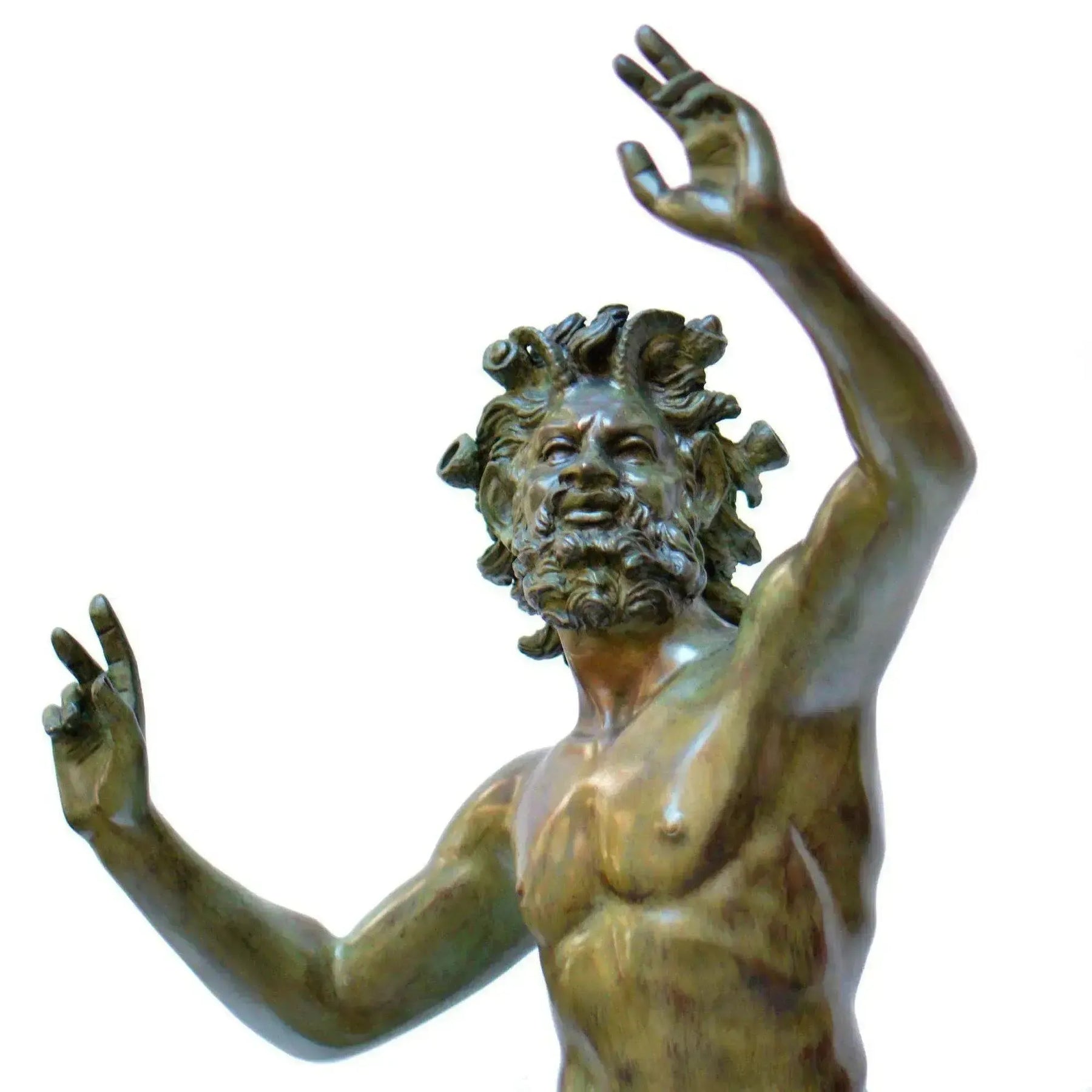
Dancing Faun of Pompeii - 85 cm Bronze Statue
Details
The bronze statue of the Dancing Faun is a faithful reproduction of one of the most iconic masterpieces of ancient art, discovered in Pompeii and now preserved at the Archaeological Museum of Naples.
The work depicts a faun dancing, a symbol of fertility and abundance in Greco-Roman culture. Its posture and joyful expression convey a sense of freedom and vitality that has fascinated for centuries. It expresses movement and joy of living, characteristics of the faun, a mythological figure associated with nature and celebrations in honor of Dionysus.
It is a bronze statue produced using the lost-wax technique, made from a mold of the original created at the beginning of the twentieth century by the historic Chiurazzi foundry in Naples. This foundry produced not only large monuments but also reproductions of statues from major museums, supplying the "souvenir" market for travelers of the Grand Tour in the late nineteenth and early twentieth centuries.
Features
- Material: bronze, lost-wax casting
- Dimensions: 85 x 35 x 35 cm
- Weight: 10 kg
- The patina color is achieved by heating the bronze with fire and applying nitric acid and copper with a brush
- Handcrafted in Italy
Historical Curiosities
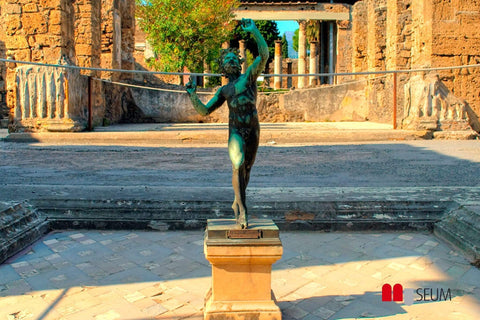
The work was found in the House of the Faun in Pompeii, one of the most important archaeological sites of antiquity, named after the artwork found inside, where it decorated the impluvium. This house is the most beautiful example of a private residence left to us from antiquity. Besides the Dancing Faun, it also housed the most precious mosaic depicting the Battle of Issus, the battle between the armies of Alexander the Great and Darius III of Persia.
Maintenance
To preserve the beauty of the statue, it is recommended to clean it with a soft, dry cloth. Avoid using harsh chemical detergents. Exposure to outdoor weather conditions may cause variations in the patina.
A sculpture inspired by one of Pompeii’s most famous symbols
The Dancing Faun is one of the most iconic figures of Pompeian art. This bronze statue is inspired by the famous sculpture found in the House of the Faun in Pompeii, one of the most important and refined domus of the ancient Roman city. The dynamic pose, body movement, and lively expression make this figure a subject of great decorative and cultural strength.
A decorative piece with great stage presence
At 85 cm tall, this bronze statue is designed to become a focal point within elegant environments, professional studios, lounges, entrances, galleries, showrooms, or spaces dedicated to classical art. The slender figure and movement of the Faun allow the sculpture to harmonize well with both classical furnishings and contemporary interiors.
Green patina or black patina: which to choose?
The green patina version recalls the archaeological appearance of ancient bronze, with a more tactile and museum-like visual effect. It is ideal for those who want an effect closer to classical sculptures preserved in museums or historic gardens.
The black patina version has a more sober, elegant, and contemporary character. It fits well in modern environments, libraries, professional studios, and minimalist spaces where a strong yet refined contrast is desired.
Where to place the statue
This reproduction of the Dancing Faun can be placed in various settings:
- in an entrance, as a scenic welcome element;
- in a lounge, next to a bookshelf, console, or important wall;
- in a professional or private studio, to convey taste, culture, and personality;
- in a gallery, showroom, or exhibition space;
- in a covered garden, patio, or protected veranda.
A choice for lovers of classical art
This statue is designed for those who want to bring into their home or professional space a direct reference to ancient art, Roman culture, and the history of Pompeii. It is not just a decorative object but a symbolic presence linked to the classical world, movement, music, dance, and the vitality of Mediterranean culture.
Shipping and packaging
The statue is prepared with particular care for shipping. Being a product important in size and value, the packaging is designed to protect the sculpture during transport and reduce the risk of bumps or damage. The product is carefully inspected before shipping.
Frequently Asked Questions
Is the statue suitable for outdoor use?
The statue can be placed in protected outdoor environments such as verandas, patios, loggias, or covered gardens. For better long-term preservation, it is advisable to avoid continuous and direct exposure to heavy rain, persistent humidity, or extreme weather conditions.
Can the patina show slight variations?
Yes. Being a bronze sculpture with a patinated finish, slight variations in color, reflection, or surface are normal and contribute to the artisanal and tactile character of the work.
Is it a reproduction of the original Pompeian statue?
The statue is a reproduction inspired by the famous Dancing Faun of Pompeii, one of the most recognizable subjects of ancient art. It is designed to enhance domestic, professional, or exhibition environments with a direct reference to classical culture.
Why choose a bronze statue?
Bronze is a material historically linked to classical sculpture. Its solidity, the depth of the patina, and the ability to highlight details make each statue particularly intense visually and decoratively.
 Discover more about how to visualize it in your space
What collectors say about this sculpture.
Authentic reviews from customers who purchased this product.
Gallery
Video


The collection, backed by Museum Shop.
Grand Tour Editions is the sculpture collection of Museum Shop. This bronze collection brings together lost-wax casting, hand finishing in Italy, clear documentation, professional packaging, and direct assistance before and after purchase.
01Since 2004Experience with Italian art, archaeology, and cultural heritage.
Museum Shop has worked with objects inspired by Italian art, archaeology, museums, and cultural heritage since 2004. This experience supports the selection and presentation of every Grand Tour Editions sculpture.
02Made in ItalyCast and hand-finished in Italy.
Each bronze is cast in Italy using the lost-wax process, then chased, refined, and patinated by hand. The finishing work is done individually on every sculpture before it is prepared for delivery.
03Certificate of AuthenticityDocumentation accompanies the sculpture.
Each sculpture is part of a limited edition, individually numbered, and accompanied by a Certificate of Authenticity with the relevant material and production information.
04Professional Packaging & Safe DeliveryPrepared specifically for safe transport.
Professionally packed and shipped. We assume the transport risk until your sculpture is safely delivered.
05Personal AssistanceDirect support before and after purchase.
Before ordering, you can request additional photographs, dimensions, availability, shipping information, or clarification about the sculpture. Assistance continues through preparation and delivery.
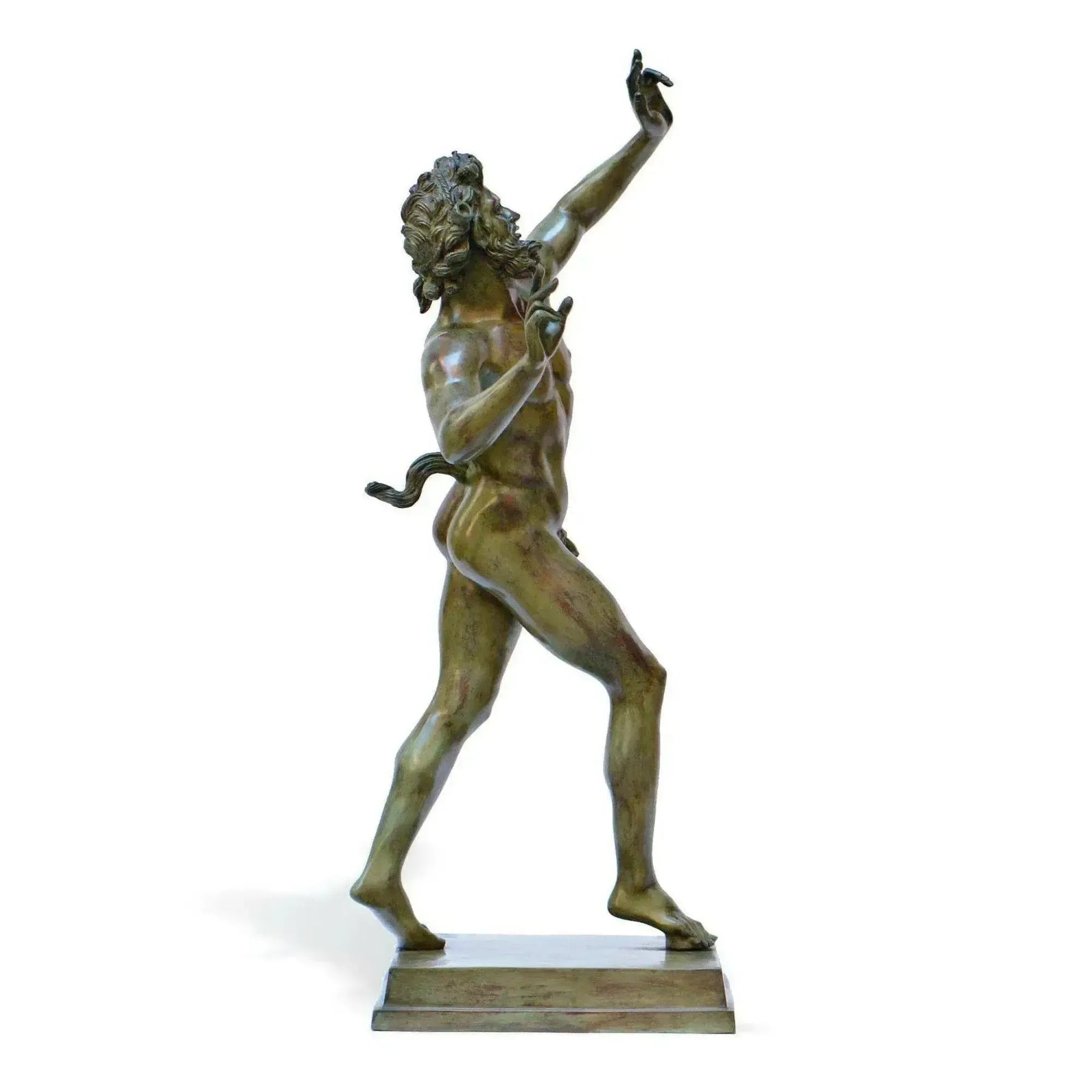
Bronze
Bronze has been used for sculpture since antiquity because it can hold fine detail while allowing forms that would be difficult to carve in stone. Its surface also responds to patination, giving the finished work depth and variation in tone.
Finished by Hand
Casting is only the beginning. Once the bronze leaves the mould, the surface is cleaned, chased, and refined by hand before the final patina is applied.
Applied by Hand
The patina gives the bronze its final tone and depth. Because this stage is done by hand, small differences from one casting to another are expected.
Made to reward a closer look.
No two surfaces are exactly alike.
Prepared in Italy. Tracked to your door.
The 20 business days refer to the preparation of your sculpture. Transit time begins once the piece has shipped. Free shipping and duties are included.
Frequently asked questions.
How is the sculpture made?
It is cast in bronze in Italy using the lost-wax process, then chased, refined, and patinated by hand.
Is each sculpture numbered?
Yes. Each sculpture belongs to a limited edition, is individually numbered, and is accompanied by a Certificate of Authenticity.
When will my sculpture ship?
Preparation takes 20 business days. Transit time begins once the sculpture has shipped.
Can I request additional photographs?
Yes. Contact us before purchasing to request additional photographs or information about the sculpture.
Will the patina be identical to the photographs?
Patination is done by hand, so small differences in tone and surface are normal from one casting to another.
Cast in Italy. Finished by hand.
Made using the lost-wax process, individually numbered, and certified.
Request product information
Tell us what you would like to know about this sculpture. We can provide additional information, photographs, availability, and shipping guidance.